About Me
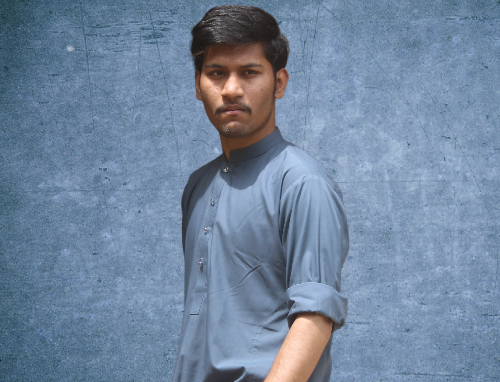
A Computer Engineering graduate from Air University, Islamabad, with expertise in Computer Vision and API Development. Currently exploring deployment and AI to drive intelligent solutions.
My Interests
Experience
Junior Data Scientist
OIRRC | November 2025 - Present
Contributing to data-driven R&D projects in healthcare, focusing on ocular imaging. Built and evaluated deep learning models and deployed services to support various tools and applications within the institute.
Lab Engineer
Air University | August 2025 - Present
Teaching and assisting students in lab sessions, supporting course experiments and hands-on projects.
AI Intern
Jantah Tech | July 2023 - September 2023
Developed chatbots using Flask and SQLite for local datasets, enabling features such as appointment booking and patient query handling. Gained practical experience with Cloudinary, Git for version control, and Postman for API testing.
Computer Vision Engineer & GenAI Intern
Botmer International | April 2025 - June 2025
Worked on an AI-powered application for visual scene understanding in industrial safety environments. Managed the end-to-end DL pipeline for real-time inference. Deployed models using FastAPI. Leveraged tools including Ultralytics YOLO, Roboflow, TensorBoard and OpenCV.
Research Work
Paper Title: SWiM3: Solid Waste Mapping Dataset
Published At: 5th International IEEE Conference on Digital Futures and Transformative Technologies | Status: Submitted/Done
Developed a solid waste dataset containing 6,429 images and 25,234 annotated instances across 3 categories.
Paper Title: An Explainable and Edge-Deployable Deep Learning Framework for Smart Waste Classification
Published At: Journal | Status: In Progress
Designed and deployed a deep learning-based smart waste classification system on a Raspberry Pi, enabling edge inference. Conducted a comparative study of state-of-the-art object detection models to identify the most effective architecture for real-time performance. Integrated explainable AI techniques to interpret model predictions.